
Industrial RO Membrane Cleaning Guide (2026): Chemicals, CIP Procedure, Fouling Types & Troubleshooting
- indresh saini
- Jul 6
- 23 min read

Industrial RO Membrane Cleaning Guide | CIP & Chemicals
INTRODUCTION
Industrial RO Membrane Cleaning Guide (2026)
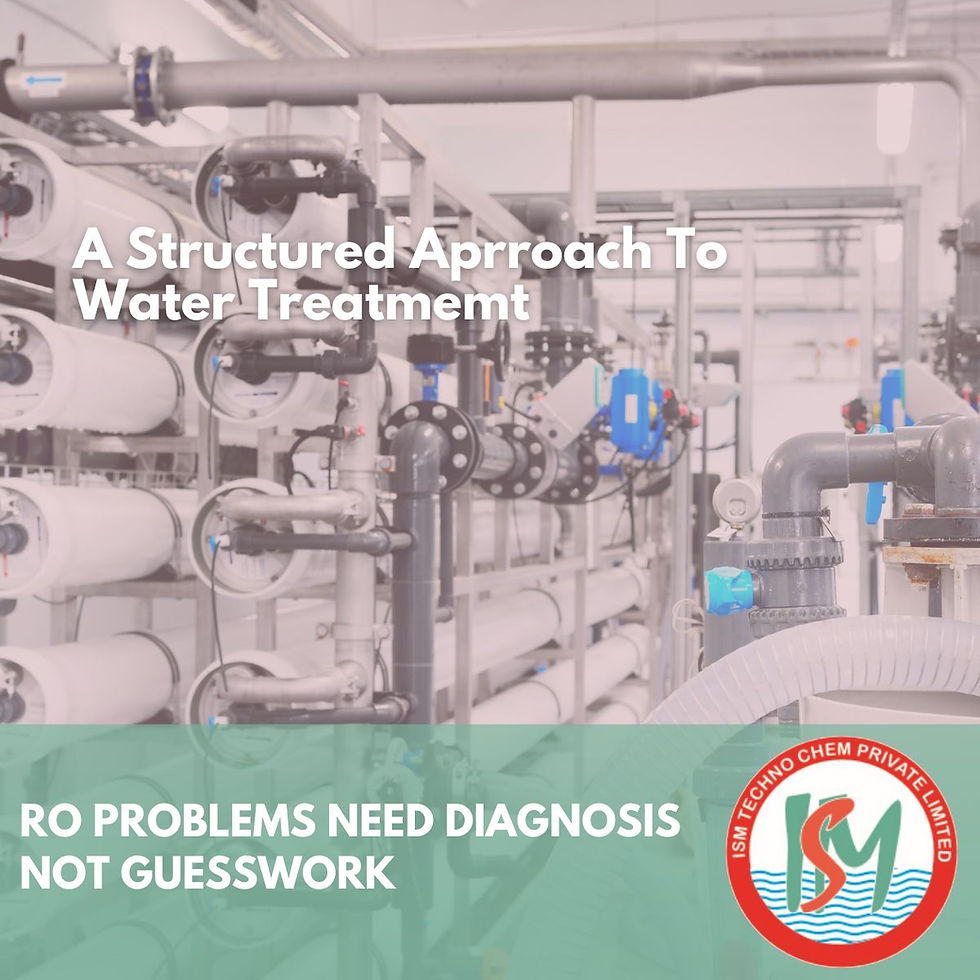
Reverse Osmosis (RO) technology has become one of the most widely used water purification methods across industries such as pharmaceuticals, food & beverage, dairy, textiles, power plants, automotive, glass manufacturing, chemical processing, and commercial utilities. Industries invest significant capital in RO systems because they provide high-quality water essential for manufacturing processes, boiler feed, cooling towers, and product quality.
However, the performance of an RO plant depends largely on the condition of its membranes. RO membranes are the heart of the system, and even the most advanced plant cannot deliver consistent performance if the membranes become fouled or scaled.
One of the most common reasons for declining RO plant performance is membrane fouling. Over time, dissolved salts, suspended solids, microorganisms, organic matter, colloidal particles, and metal deposits accumulate on the membrane surface. These deposits reduce water flow, increase operating pressure, decrease salt rejection, raise energy consumption, and ultimately shorten membrane life.
Ignoring membrane fouling can lead to serious operational and financial consequences. Industries often experience:
Reduced permeate production
Increased feed pressure
Higher electricity consumption
Frequent plant shutdowns
Increased membrane replacement costs
Reduced production efficiency
Increased chemical consumption
In many cases, companies replace membranes prematurely when proper cleaning could have restored most of their original performance. This not only increases operating costs but also reduces the overall return on investment of the RO system.
Industrial RO membrane cleaning is therefore not simply a maintenance activity—it is a critical part of an effective water treatment program. A well-planned cleaning schedule, combined with the correct cleaning chemicals and proper operating practices, can significantly extend membrane life, improve plant efficiency, and reduce overall operating costs.
This comprehensive guide has been prepared by ISM Techno Chem Pvt Ltd to help plant engineers, utility managers, maintenance teams, consultants, and industrial users understand every important aspect of RO membrane cleaning. Whether you operate a small industrial RO plant or a large multi-stage water treatment system, the principles discussed in this guide will help you improve membrane performance and avoid costly operational issues.
In this guide, you will learn:
What causes RO membrane fouling
Different types of membrane fouling
How to identify each fouling type
When membranes should be cleaned
How to select the correct cleaning chemicals
Step-by-step CIP (Clean-in-Place) procedure
Common membrane cleaning mistakes
Preventive maintenance practices
Troubleshooting methods used by water treatment professionals
By understanding these concepts, industries can increase membrane life, reduce downtime, improve water recovery, and achieve significant savings in maintenance and operating costs.
Why This Guide Matters
Many industries focus on installing a high-quality RO plant but overlook the importance of ongoing membrane maintenance. In reality, membrane performance is influenced not only by membrane quality but also by feed water characteristics, pretreatment efficiency, operating conditions, and chemical treatment programs.
Proper membrane cleaning provides several long-term benefits:
Restores permeate flow and production capacity
Reduces differential pressure across membrane elements
Improves salt rejection performance
Lowers energy consumption
Extends membrane service life
Reduces frequency of membrane replacement
Improves overall RO plant reliability
A successful membrane cleaning program should always be combined with proper pretreatment systems such as Multigrade Filters (MGF), Activated Carbon Filters (ACF), Water Softeners, Ultrafiltration (UF) Systems, and appropriate RO Antiscalant dosing. Together, these measures help minimize fouling and maximize membrane performance.
Chapter 1
What is RO Membrane Fouling?
Reverse Osmosis (RO) membranes are designed to separate dissolved salts, suspended impurities, microorganisms, and organic contaminants from water while allowing only purified water (permeate) to pass through. During continuous operation, however, various contaminants present in the feed water begin to accumulate on the membrane surface.
This gradual accumulation of unwanted materials is known as RO membrane fouling.
Membrane fouling is one of the most common reasons for poor RO plant performance and is responsible for increased operating costs, reduced water production, higher energy consumption, and premature membrane replacement in industrial water treatment systems.
Unlike a sudden equipment failure, membrane fouling develops gradually. As deposits continue to build on the membrane surface and within the feed spacer channels, the resistance to water flow increases. The RO system then requires higher pressure to maintain the same production, increasing power consumption and mechanical stress on pumps and membranes.
If fouling is not controlled through proper pretreatment, chemical dosing, and periodic cleaning, it can become irreversible, permanently reducing membrane performance.
How Does RO Membrane Fouling Occur?
During the reverse osmosis process, feed water flows across the membrane surface under high pressure. Pure water molecules pass through the semi-permeable membrane, while dissolved salts and contaminants are rejected and carried away in the concentrate stream.
However, not all rejected contaminants leave the membrane surface immediately.
As water permeates through the membrane, rejected impurities become concentrated near the membrane surface. This phenomenon is known as concentration polarization.
If these concentrated impurities exceed their solubility limits or remain in contact with the membrane for prolonged periods, they begin forming deposits. Over time, these deposits develop into fouling layers that restrict water flow and reduce membrane efficiency.
The rate of fouling depends on several factors, including:
Feed water quality
Membrane flux
Recovery percentage
Cross-flow velocity
Pretreatment efficiency
Chemical dosing program
Operating pressure
Temperature
Cleaning frequency
Proper system design and operation aim to minimize concentration polarization and delay fouling formation.
Why is Membrane Fouling a Serious Problem?
Many industries initially notice only a slight reduction in water production and continue operating the plant without investigating the cause. Unfortunately, membrane fouling is progressive. What begins as a minor decline in performance can eventually lead to significant operational and financial losses.
Ignoring membrane fouling may result in:
Reduction in permeate flow rate
Increase in feed pressure
Higher differential pressure across membrane stages
Increased electrical power consumption
Reduced salt rejection
Decline in product water quality
Frequent plant shutdowns
Increased chemical cleaning frequency
Shortened membrane life
Higher maintenance costs
For large industrial RO plants operating continuously, even a small reduction in membrane efficiency can translate into substantial annual losses due to increased energy consumption, lower production capacity, and more frequent membrane replacement.
Understanding Concentration Polarization
Before actual fouling occurs, every RO membrane experiences concentration polarization.
Concentration polarization refers to the temporary increase in dissolved solids immediately adjacent to the membrane surface. As water permeates through the membrane, salts remain behind, creating a localized region where the concentration of dissolved minerals is significantly higher than in the bulk feed water.
Under normal operating conditions, the cross-flow velocity of the feed water carries these concentrated salts away from the membrane surface.
However, when:
Recovery is too high,
Cross-flow velocity is low,
Feed water contains excessive hardness,
Pretreatment is inadequate,
the concentration becomes high enough for minerals to precipitate or for contaminants to attach permanently to the membrane surface.
This transition marks the beginning of membrane fouling.
Understanding concentration polarization is important because effective RO operation focuses not only on cleaning fouled membranes but also on minimizing the conditions that allow fouling to develop.
Signs That Membrane Fouling Has Started
Early identification of fouling helps prevent irreversible membrane damage.
Common operational indicators include:
Increase in Feed Pressure
As deposits accumulate, the RO system requires higher pressure to maintain production.
Increase in Differential Pressure (ΔP)
A rise in differential pressure across membrane stages often indicates fouling within feed channels.
Reduction in Permeate Flow
Water production gradually decreases because the fouling layer restricts water passage through the membrane.
Increase in Conductivity
If fouling damages the membrane or disrupts flow patterns, salt rejection may decrease, resulting in higher permeate conductivity.
Frequent Cleaning Requirement
If membranes require cleaning much more frequently than expected, the root cause is usually poor pretreatment or incorrect chemical dosing rather than the membrane itself.
Can Membrane Fouling Be Completely Prevented?
The simple answer is No.
All RO membranes experience some level of fouling during normal operation. The objective of an effective water treatment program is not to eliminate fouling entirely but to slow its rate of formation and ensure that any fouling remains reversible through periodic cleaning.
A properly designed RO system combines several protective measures:
Efficient pretreatment (MGF, ACF, Softener, UF)
Correct antiscalant selection and dosing
Proper operating recovery
Routine monitoring of operating parameters
Scheduled Clean-in-Place (CIP)
Feed water quality control
Regular maintenance and inspections
When these practices are followed, membrane life can often exceed 5–7 years, depending on water quality, membrane type, and operating conditions.
Expert Tip
Membrane fouling is usually a symptom—not the root cause.If your RO membranes foul repeatedly, the real issue often lies in feed water quality, pretreatment performance, operating conditions, or chemical dosing. Simply cleaning or replacing membranes without addressing these underlying causes will only lead to recurring problems.
Chapter 2: Types of RO Membrane Fouling
Understanding the type of fouling affecting an RO membrane is the first and most important step in selecting the correct cleaning method and preventing recurring performance issues. Different foulants require different cleaning chemicals and operating strategies. Using the wrong cleaning solution may not only fail to restore membrane performance but can also cause irreversible membrane damage.
RO membrane fouling is generally classified into five major categories:
Inorganic Scale Fouling
Organic Fouling
Biological Fouling (Biofouling)
Colloidal Fouling
Metal Oxide Fouling
Each type of fouling has distinct causes, symptoms, and treatment methods.
1. Inorganic Scale Fouling
Inorganic scaling is one of the most common causes of membrane performance deterioration in industrial RO systems. It occurs when dissolved minerals present in feed water exceed their solubility limits and begin precipitating on the membrane surface.
As water passes through the membrane, dissolved salts become increasingly concentrated in the reject stream. If proper antiscalant dosing or recovery control is not maintained, these salts crystallize and form hard deposits.
Common scale-forming compounds include:
Scale Type | Common Source |
Calcium Carbonate (CaCO₃) | High alkalinity and hardness |
Calcium Sulfate (CaSO₄) | Sulfate-rich groundwater |
Barium Sulfate (BaSO₄) | Industrial wastewater |
Strontium Sulfate (SrSO₄) | High TDS water |
Silica (SiO₂) | Borewell water, surface water |
Symptoms of Scale Fouling
Gradual increase in feed pressure
Higher differential pressure across membrane stages
Reduction in permeate flow
Increased energy consumption
Hard crystalline deposits on membrane surface
Reduced cleaning effectiveness if scaling becomes severe
Prevention
Proper antiscalant selection
Accurate chemical dosing
Maintaining recommended recovery
Feed water analysis
Periodic monitoring of scaling indices
Effective pretreatment
Recommended Cleaning
Acidic membrane cleaners are generally used for carbonate and sulfate scales. Silica scaling requires specialized cleaning procedures and is much more difficult to remove once it hardens.
Calcium Carbonate Scaling
Calcium carbonate is the most frequently encountered scale in industrial RO plants.
It forms when:
Feed water hardness is high
Alkalinity is excessive
Recovery is operated beyond design limits
Antiscalant dosage is insufficient
The formation of calcium carbonate scale significantly reduces membrane permeability and increases operating pressure.
Typical Industries
Textile
Food Processing
Dairy
Pharmaceutical
Glass Manufacturing
Prevention
Online antiscalant dosing
Softener or nanofiltration pretreatment where applicable
Routine monitoring of LSI (Langelier Saturation Index)
Silica Scaling
Silica is considered one of the most difficult membrane foulants to remove.
Unlike carbonate scaling, silica deposits become extremely hard and chemically resistant once polymerized on the membrane surface.
Silica scaling commonly occurs in:
Borewell water
High silica groundwater
Mining applications
Glass industry water systems
Why Silica Is Dangerous
Silica deposits cannot always be completely removed through normal chemical cleaning. Severe silica scaling often results in permanent membrane damage and early membrane replacement.
Therefore, prevention is significantly more economical than cleaning.
2. Organic Fouling
Organic fouling occurs when natural organic matter (NOM), oils, greases, proteins, surfactants, humic substances, or industrial organic contaminants accumulate on the membrane surface.
Unlike mineral scales, organic foulants usually form sticky layers that trap additional suspended solids and microorganisms.
Common sources include:
Surface water
Food processing wastewater
Dairy effluent
Industrial wastewater
Cooling tower blowdown
Oil-contaminated water
Symptoms
Declining permeate flow
Increased differential pressure
Brown or yellow deposits
Reduced membrane permeability
Prevention
Activated Carbon Filter (ACF)
Ultrafiltration
Oil removal systems
Proper pretreatment
Regular membrane cleaning
Recommended Cleaning
Organic foulants are typically removed using alkaline membrane cleaners containing surfactants and dispersants.
3. Biological Fouling (Biofouling)
Biofouling is one of the most serious and recurring problems in RO systems.
It occurs when bacteria, fungi, algae, or other microorganisms attach to the membrane surface and begin forming a protective layer known as a biofilm.
Once established, biofilms become highly resistant to normal cleaning procedures.
How Biofilms Develop
The process generally follows these stages:
Bacteria enter the RO system.
Microorganisms attach to the membrane surface.
They produce extracellular polymeric substances (EPS).
A protective biofilm develops.
Additional microorganisms become trapped.
The biofilm grows thicker over time.
This biofilm restricts water flow and protects bacteria from disinfectants.
Common Symptoms
Rapid pressure increase
Frequent cleaning requirement
Slimy deposits
Foul odor during cleaning
Reduced permeate production
High pressure drop in first-stage elements
Prevention
Effective chlorination (before dechlorination if using polyamide membranes)
UV or ozone treatment where appropriate
Regular sanitization
Proper SMBS dosing after chlorination
Elimination of stagnant water
Recommended Cleaning
Biofouling requires alkaline cleaners combined with approved biocides, followed by thorough flushing.
4. Colloidal Fouling
Colloidal fouling occurs when extremely fine suspended particles remain stable in water and deposit on the membrane surface.
Common colloidal particles include:
Clay
Silt
Fine silica
Iron hydroxide
Aluminium hydroxide
Fine suspended solids
Although individually microscopic, these particles gradually block membrane feed channels and reduce water production.
Indicators
High SDI (Silt Density Index)
Rapid increase in differential pressure
Low turbidity removal in pretreatment
Brown deposits
Prevention
Multigrade Filter (MGF)
Ultrafiltration
Cartridge Filters
Proper coagulation and flocculation
Maintaining SDI below membrane manufacturer recommendations
Recommended Cleaning
Colloidal fouling generally responds well to alkaline cleaners combined with dispersants.
5. Metal Oxide Fouling
Metal fouling occurs due to precipitation of dissolved metals such as:
Iron
Manganese
Aluminium
Copper
Iron fouling is particularly common in groundwater applications and systems with corroded pipelines.
Sources
Borewell water
Corroded piping
Improper pretreatment
Oxidized iron entering the RO system
Symptoms
Orange, reddish-brown, or black deposits
Declining permeate flow
Increased pressure drop
Reduced membrane life
Prevention
Iron removal systems
Oxidation and filtration
Manganese removal
Regular water quality monitoring
Recommended Cleaning
Metal oxide deposits are generally removed using acidic membrane cleaners formulated specifically for iron and metal scale removal.
Quick Comparison of RO Membrane Fouling Types
Fouling Type | Common Cause | Typical Symptoms | Recommended Cleaning |
Inorganic Scale | Hardness, silica, sulfates | High pressure, low flow | Acid Cleaner |
Organic Fouling | Oils, proteins, humic substances | Sticky deposits, reduced permeability | Alkaline Cleaner |
Biofouling | Bacteria & algae | Slime, odor, pressure rise | Alkaline Cleaner + Biocide |
Colloidal Fouling | Clay, silt, suspended solids | High differential pressure | Alkaline Cleaner + Dispersant |
Metal Oxide Fouling | Iron, manganese, aluminium | Brown/red deposits | Acid Cleaner |
Chapter 3: How to Identify the Type of RO Membrane Fouling
One of the biggest mistakes made in industrial RO maintenance is selecting a membrane cleaning chemical without first identifying the actual type of fouling.
Cleaning a silica-scaled membrane with an alkaline cleaner or attempting to remove biofouling using only an acidic cleaner will rarely restore membrane performance. In many cases, repeated incorrect cleaning can permanently damage the membrane or shorten its service life.
Before initiating any Clean-in-Place (CIP) procedure, engineers should evaluate the operating data of the RO plant and identify the likely foulant. A systematic diagnosis not only improves cleaning efficiency but also helps eliminate the root cause of recurring fouling.
The following parameters should always be monitored.
1. Feed Pressure
Feed pressure is one of the first indicators of membrane condition.
When membrane pores begin to clog or deposits accumulate on the membrane surface, the high-pressure pump must generate additional pressure to maintain the required permeate flow.
A gradual increase in feed pressure generally indicates membrane fouling rather than a sudden mechanical problem.
Possible Causes
Inorganic scale
Organic deposits
Biofilm formation
Colloidal fouling
Recommended Action
Compare the current feed pressure with the baseline pressure recorded when the membranes were new or immediately after the last successful CIP.
A continuous increase of more than 10–15% should be investigated.
2. Differential Pressure (ΔP)
Differential pressure is one of the most reliable indicators of fouling inside membrane feed channels.
It is calculated as:
Differential Pressure = Feed Pressure − Concentrate Pressure
As suspended solids, biofilm, or scale accumulate inside the feed spacer, water flow becomes restricted, causing the pressure drop across the membrane stage to increase.
Normal Condition
Stable differential pressure
Fouled Condition
Increasing differential pressure
Common Causes
Biofouling
Colloidal fouling
Iron deposits
Heavy particulate loading
Most membrane manufacturers recommend investigating the system if differential pressure increases by 15% or more from the baseline value.
3. Permeate Flow Rate
Permeate flow represents the amount of purified water produced by the RO plant.
A gradual decline in permeate flow is one of the earliest signs of membrane fouling.
The reduction occurs because deposits on the membrane surface create additional resistance to water passage.
Typical Symptoms
Production capacity decreases
Plant takes longer to fill storage tanks
Recovery percentage declines
Production targets are missed
Whenever permeate flow decreases by approximately 10–15%, membrane cleaning should be considered after confirming that operating conditions have not changed.
4. Salt Rejection and Conductivity
A healthy RO membrane removes dissolved salts with very high efficiency.
If membrane integrity begins to deteriorate or fouling disrupts water flow patterns, the conductivity of permeate water starts increasing.
Monitor:
Feed Conductivity
Permeate Conductivity
Salt Rejection Percentage
Salt rejection is calculated using the following equation:
Salt Rejection (%)=(Feed Conductivity−Permeate ConductivityFeed Conductivity)×100\text{Salt Rejection (\%)} = \left( \frac{\text{Feed Conductivity} - \text{Permeate Conductivity}} {\text{Feed Conductivity}} \right) \times 100Salt Rejection (%)=(Feed ConductivityFeed Conductivity−Permeate Conductivity)×100
A noticeable decline in salt rejection may indicate:
Membrane damage
Oxidation
Chemical attack
Severe fouling
O-ring leakage
5. Silt Density Index (SDI)
The Silt Density Index (SDI) measures the fouling potential of feed water due to suspended solids and colloidal particles.
It is one of the most important parameters before RO membranes.
General Guidelines
SDI Value | Feed Water Quality |
Below 3 | Excellent |
3–5 | Acceptable |
Above 5 | High fouling risk |
A consistently high SDI usually indicates inadequate pretreatment and increases the likelihood of colloidal fouling.
To maintain a low SDI, industries typically use:
Multigrade Filters (MGF)
Activated Carbon Filters (ACF)
Ultrafiltration (UF)
Cartridge Filters
6. Visual Inspection During CIP
Whenever membrane elements are removed for inspection, they should be examined carefully.
The appearance of deposits often provides valuable clues regarding the fouling type.
Deposit Appearance | Likely Fouling |
White hard deposits | Calcium carbonate scale |
Glass-like white deposits | Silica scale |
Brown deposits | Iron fouling |
Black deposits | Manganese deposits |
Slimy layer | Biofouling |
Yellow sticky layer | Organic fouling |
Visual inspection should always be combined with operating data for an accurate diagnosis.
7. Membrane Autopsy
For large industrial RO systems experiencing repeated failures, membrane autopsy is considered the most accurate diagnostic method.
During an autopsy:
The membrane element is opened.
Deposits are sampled.
Laboratory analysis identifies the foulant.
Recommendations are made to eliminate the root cause.
Typical laboratory analyses include:
SEM (Scanning Electron Microscopy)
EDS (Energy Dispersive Spectroscopy)
FTIR Analysis
XRD Analysis
Microbiological Testing
Although membrane autopsy involves additional cost, it often prevents repeated membrane failures and unnecessary replacements.
8. Trend Analysis – The Best Predictive Tool
One-time readings are useful, but trend analysis provides a much clearer picture of membrane health.
Instead of relying on today's pressure or flow alone, compare current values with historical data.
The following parameters should be recorded daily:
Feed Pressure
Permeate Pressure
Concentrate Pressure
Differential Pressure
Feed Conductivity
Permeate Conductivity
Permeate Flow
Reject Flow
Recovery Percentage
pH
Temperature
Maintaining a daily operating log allows engineers to identify gradual performance deterioration long before serious fouling occurs.
RO Membrane Fouling Diagnosis Matrix
Observation | Possible Cause | Recommended Action |
Feed pressure increasing | Scale or fouling | Inspect water chemistry, plan CIP |
Differential pressure increasing | Biofouling or colloidal deposits | Check pretreatment and clean membranes |
Permeate flow decreasing | Scaling, organic fouling | Identify foulant and perform appropriate CIP |
Conductivity increasing | Membrane damage or leakage | Inspect membrane integrity and O-rings |
Frequent cleaning required | Poor pretreatment or incorrect chemical dosing | Review pretreatment system and antiscalant program |
High SDI | Suspended solids entering RO | Improve filtration before RO |
Best Practices for Early Detection
Early diagnosis is always more economical than corrective maintenance.
To minimize fouling-related problems:
Record operating parameters daily.
Compare readings with baseline values.
Investigate gradual changes rather than waiting for major failures.
Perform water analysis periodically.
Verify antiscalant dosage regularly.
Maintain pretreatment equipment.
Schedule membrane cleaning based on performance trends, not fixed time intervals.
A proactive monitoring program significantly extends membrane life, reduces operating costs, and improves overall plant reliability.
💡 Expert Tip from ISM Techno Chem
Do not decide on membrane cleaning based solely on operating hours or calendar schedules. Always evaluate performance indicators such as differential pressure, permeate flow, and salt rejection before initiating a CIP. Cleaning at the right time with the correct chemical restores performance effectively and helps maximize membrane life.
Chapter 4: RO Membrane Cleaning Chemicals – Selecting the Right Chemical for Effective Cleaning
Cleaning an RO membrane is not simply about circulating a chemical through the system. The effectiveness of a Clean-in-Place (CIP) procedure depends primarily on selecting the correct cleaning chemical based on the type of fouling present.
Using the wrong cleaning chemical often results in poor cleaning efficiency, repeated CIP cycles, unnecessary downtime, and in severe cases, irreversible membrane damage.
For example, an acid cleaner is highly effective for removing calcium carbonate scale but will have little effect on biological fouling. Similarly, an alkaline cleaner can effectively remove organic deposits and biofilms but cannot dissolve inorganic mineral scales.
Therefore, identifying the fouling type before selecting the cleaning chemical is one of the most important steps in membrane maintenance.
Why Different Fouling Requires Different Cleaning Chemicals
Each foulant has a different chemical composition and requires a specific cleaning mechanism.
Fouling Type | Recommended Cleaning Chemical |
Calcium Carbonate Scale | Acid Cleaner |
Calcium Sulfate Scale | Acid Cleaner |
Iron & Manganese Deposits | Acid Cleaner |
Organic Fouling | Alkaline Cleaner |
Oil & Grease | Alkaline Cleaner |
Biofouling | Alkaline Cleaner + Biocide |
Colloidal Fouling | Alkaline Cleaner with Dispersants |
Silica Scaling | Specialized Silica Cleaner |
Selecting the proper cleaner ensures maximum cleaning efficiency while protecting the membrane from unnecessary chemical exposure.
1. Acidic RO Membrane Cleaners
Acidic membrane cleaners are formulated to dissolve inorganic mineral deposits that accumulate on membrane surfaces.
These cleaners work by reacting with scale-forming compounds and converting them into soluble salts that can be flushed out during the cleaning process.
Acid cleaners are typically used for removing:
Calcium Carbonate Scale
Calcium Sulfate Deposits
Iron Oxides
Manganese Deposits
Metal Hydroxides
Rust Deposits
Advantages
Excellent scale removal
Restores permeate flow
Reduces operating pressure
Improves membrane efficiency
Extends membrane life
Typical Cleaning pH
Most acid cleaning solutions are prepared within a pH range of 2–3, depending on the membrane manufacturer's recommendations and the cleaning formulation.
When to Use
Use an acid cleaner when you observe:
White crystalline deposits
High feed pressure
Increased differential pressure due to mineral scaling
Reduced permeate flow caused by hardness deposits
2. Alkaline RO Membrane Cleaners
Alkaline cleaners are specifically designed to remove organic contaminants that adhere to the membrane surface.
Unlike acid cleaners, alkaline formulations break down proteins, oils, fats, grease, biological slime, and organic polymers through chemical hydrolysis and surfactant action.
Effective Against
Organic Fouling
Oil & Grease
Proteins
Dairy Residues
Biofilms
Humic & Fulvic Acids
Surface Organic Matter
Advantages
Removes stubborn organic deposits
Breaks down biological slime
Improves membrane permeability
Restores water production
Suitable for routine CIP programs
Typical Cleaning pH
Alkaline cleaning solutions generally operate within a pH range of 10–12, depending on membrane compatibility and cleaning formulation.
When to Use
An alkaline cleaner is recommended when:
Differential pressure increases gradually
Membrane surface becomes slimy
Organic contamination is present
Biofilm formation is suspected
Feed water contains oils or proteins
3. RO Membrane Biocides
Biological fouling cannot always be removed using alkaline cleaners alone.
Once microorganisms establish a biofilm, they become protected by extracellular polymeric substances (EPS), making them resistant to normal cleaning.
Approved membrane-compatible biocides help destroy microorganisms and prevent rapid biofilm regrowth.
Biocides are used for:
Bacteria
Algae
Fungi
Biofilm control
Biocides should always be selected according to the membrane manufacturer's compatibility guidelines.
4. Specialized Silica Cleaning Chemicals
Silica is one of the most difficult foulants encountered in industrial RO plants.
Unlike calcium carbonate scale, silica deposits become highly resistant after hardening.
Specialized silica cleaning formulations are often required for partial removal.
However, prevention remains the best strategy.
Proper antiscalant dosing, optimized recovery, and feed water monitoring are essential for minimizing silica scaling.
Role of RO Antiscalants in Preventing Cleaning
The most economical membrane cleaning is the one you never have to perform.
RO antiscalants are preventive chemicals that inhibit the precipitation and crystal growth of scale-forming minerals before they deposit on membrane surfaces.
An effective antiscalant program helps:
Reduce cleaning frequency
Improve membrane life
Increase system recovery
Lower operating costs
Minimize membrane replacement
Proper antiscalant selection should always be based on feed water chemistry, recovery rate, temperature, and scaling potential.
How to Select the Correct Cleaning Chemical
The following table provides a quick reference for selecting the appropriate cleaning solution.
Plant Condition | Likely Fouling | Recommended Cleaner |
High feed pressure with white deposits | Calcium carbonate scale | Acid Cleaner |
Brown or reddish deposits | Iron fouling | Acid Cleaner |
Slimy membrane surface | Biofouling | Alkaline Cleaner + Biocide |
Oil contamination | Organic fouling | Alkaline Cleaner |
High SDI and suspended solids | Colloidal fouling | Alkaline Cleaner with dispersants |
High silica feed water | Silica scaling | Specialized Silica Cleaner |
Factors Affecting Cleaning Performance
Even the best cleaning chemical may fail if the cleaning process is not carried out correctly.
The following parameters significantly influence cleaning effectiveness:
Correct chemical selection
Proper cleaning concentration
Cleaning solution temperature
Solution pH
Cleaning duration
Flow velocity
Soaking time
Thorough rinsing after CIP
These parameters should always follow membrane manufacturer recommendations.
Common Mistakes While Selecting Cleaning Chemicals
Many industries unknowingly reduce membrane life by making simple but costly mistakes.
Avoid the following:
Selecting chemicals without identifying the fouling type
Using highly concentrated acids or alkalis
Mixing acid and alkaline cleaners together
Using incompatible cleaning chemicals
Ignoring membrane manufacturer guidelines
Cleaning too frequently without solving the root cause
Delaying cleaning until fouling becomes irreversible
A properly planned cleaning program always begins with diagnosis, not with chemical selection.
ISM Techno Chem's Approach to RO Membrane Cleaning
At ISM Techno Chem Pvt. Ltd., we believe that membrane cleaning should be based on technical evaluation rather than trial and error.
Our approach includes:
Feed water quality assessment
Membrane performance analysis
Fouling identification
Selection of suitable cleaning chemicals
Guidance on CIP procedures
Recommendations for antiscalant dosing
Performance monitoring after cleaning
By combining the correct cleaning chemistry with proper operating practices, industries can significantly improve membrane performance, reduce maintenance costs, and maximize membrane service life.
Best Practices for Long Membrane Life
To reduce cleaning frequency and improve overall RO performance:
Maintain an effective pretreatment system.
Dose the correct antiscalant at the recommended concentration.
Monitor feed pressure, differential pressure, and permeate flow daily.
Schedule CIP based on performance trends rather than fixed intervals.
Use only membrane-compatible cleaning chemicals.
Maintain detailed operating records for trend analysis.
Preventive maintenance is always more economical than corrective maintenance.
Chapter 5: Complete Industrial RO Membrane CIP Procedure
Clean-in-Place (CIP) is the process of cleaning RO membranes without removing them from the pressure vessels. A properly executed CIP restores membrane performance, reduces operating pressure, improves permeate flow, and extends membrane life.
It is important to identify the type of fouling before selecting the cleaning chemical. Always follow the membrane manufacturer's recommendations regarding cleaning pH, temperature, and chemical compatibility.
When Should RO Membranes Be Cleaned?
Membrane cleaning should be considered when one or more of the following conditions occur:
Permeate flow decreases by 10–15%
Differential pressure increases by 15% or more
Feed pressure increases significantly
Salt rejection decreases
Water quality deteriorates
Fouling is confirmed through performance monitoring
Timely cleaning is far more effective than delaying CIP until fouling becomes severe.
Standard CIP Procedure
Step 1: System Preparation
Shut down the RO plant safely.
Isolate the membrane system.
Drain the remaining feed water.
Fill the CIP tank with clean RO permeate or demineralized water.
Step 2: Prepare the Cleaning Solution
Prepare the cleaning solution according to the type of fouling:
Acid Cleaner: For inorganic scale, calcium carbonate, iron, and metal deposits.
Alkaline Cleaner: For organic fouling, oil, grease, proteins, and biofilms.
Always prepare the solution using clean water and mix thoroughly before circulation.
Step 3: Circulate the Cleaning Solution
Circulate the cleaning solution through the membrane system at low pressure and recommended flow rate.
Maintain:
Recommended solution temperature
Appropriate pH
Continuous circulation for adequate contact time
Avoid excessive pressure during cleaning as it may compact foulants further into the membrane surface.
Step 4: Soaking
For heavy fouling, stop circulation and allow the membranes to soak in the cleaning solution.
Soaking helps dissolve stubborn deposits and improves cleaning efficiency.
Step 5: Final Rinse
After cleaning, completely drain the chemical solution.
Flush the membranes thoroughly using clean permeate water until the rinse water reaches neutral pH and all cleaning chemicals have been removed.
Step 6: Restart the RO Plant
Restart the RO system gradually and monitor:
Feed Pressure
Differential Pressure
Permeate Flow
Permeate Conductivity
Salt Rejection
Compare these values with historical operating data to evaluate cleaning effectiveness.
Safety Precautions
Always wear appropriate PPE.
Never mix acid and alkaline cleaning chemicals.
Prepare cleaning chemicals in a well-ventilated area.
Dispose of spent cleaning solutions according to local environmental regulations.
Follow membrane manufacturer guidelines at all times.
Chapter 6: RO Membrane Troubleshooting Guide
Regular monitoring of operating parameters allows engineers to identify problems before they become severe. The following table provides a quick troubleshooting reference for common RO membrane issues.
Problem | Possible Cause | Recommended Action |
High Feed Pressure | Scaling or membrane fouling | Perform membrane cleaning and check antiscalant dosing |
High Differential Pressure | Biofouling or suspended solids | Inspect pretreatment and perform CIP |
Reduced Permeate Flow | Scaling, fouling or membrane aging | Identify foulant and clean membranes |
High Permeate Conductivity | Membrane damage or O-ring leakage | Inspect membrane integrity and replace damaged components |
Frequent CIP Requirement | Poor pretreatment or incorrect chemical dosing | Review feed water quality and pretreatment system |
Rapid Biofouling | Bacterial contamination | Improve sanitization and biocide treatment |
Scaling Recurring Frequently | Incorrect antiscalant selection | Review feed water chemistry and optimize dosing |
Best Troubleshooting Practices
Record operating parameters daily.
Compare readings with baseline performance.
Never ignore gradual performance decline.
Perform periodic feed water analysis.
Maintain proper pretreatment systems.
Investigate the root cause instead of repeatedly cleaning membranes.
A systematic troubleshooting approach minimizes downtime and improves membrane reliability.
Chapter 7: Preventive Maintenance for Long Membrane Life
Preventive maintenance is the most effective way to maximize RO membrane performance and reduce operating costs. Rather than reacting to membrane failures, industries should adopt a proactive maintenance program based on routine monitoring and scheduled inspections.
Daily Checks
Record feed, permeate, and reject pressures.
Monitor permeate flow.
Check permeate conductivity.
Verify antiscalant dosing.
Inspect for leaks and abnormal pump noise.
Weekly Checks
Review differential pressure trends.
Inspect cartridge filters.
Check dosing pumps and chemical levels.
Verify pretreatment system performance.
Monthly Checks
Calibrate conductivity and pH meters.
Analyze feed water quality.
Review operating data for performance changes.
Inspect membrane cleaning records.
Annual Maintenance
Evaluate overall membrane performance.
Replace worn cartridge filters regularly.
Inspect pressure vessels and piping.
Conduct membrane autopsy if repeated fouling occurs.
Review chemical treatment program and optimize if required.
Key Recommendations
A successful preventive maintenance program should include:
Efficient pretreatment (MGF, ACF, UF, Softener)
Correct antiscalant dosing
Timely membrane cleaning
Routine water analysis
Daily performance monitoring
Proper operating recovery
Trained operating personnel
With proper maintenance, industrial RO membranes can often provide reliable service for 5 to 7 years, depending on feed water quality and operating conditions.
Chapter 8: Frequently Asked Questions (FAQs)
1. What causes RO membrane fouling?
RO membrane fouling is caused by the accumulation of inorganic scale, organic matter, bacteria, colloidal particles, iron, manganese, and suspended solids on the membrane surface. Poor pretreatment and incorrect chemical dosing are the most common reasons for rapid fouling.
2. How often should industrial RO membranes be cleaned?
There is no fixed cleaning schedule. Membranes should be cleaned when operating parameters indicate fouling, such as:
10–15% reduction in permeate flow
15% increase in differential pressure
Reduced salt rejection
Increased feed pressure
3. Which chemical is used for RO membrane cleaning?
The cleaning chemical depends on the type of fouling:
Acid Cleaners – For calcium carbonate, iron, and mineral scaling.
Alkaline Cleaners – For organic deposits, oil, grease, proteins, and biofouling.
Specialized Cleaners – For silica and other difficult foulants.
4. Can RO membranes be cleaned instead of replaced?
Yes. In most cases, properly fouled membranes can be restored through an effective CIP process. Timely cleaning often extends membrane life and reduces replacement costs.
5. What is the normal life of an industrial RO membrane?
With proper pretreatment, correct antiscalant dosing, routine cleaning, and good operating practices, industrial RO membranes typically last 5–7 years, depending on feed water quality and operating conditions.
6. What is Clean-in-Place (CIP)?
CIP is a cleaning process where membrane cleaning chemicals are circulated through the RO system without removing the membrane elements from the pressure vessels. It is the most widely used method for industrial membrane cleaning.
7. Why is differential pressure increasing in my RO plant?
An increase in differential pressure usually indicates fouling within the membrane feed channels. Common causes include biofouling, suspended solids, colloidal deposits, and mineral scaling.
8. Why is permeate flow decreasing?
Reduced permeate flow generally occurs due to membrane fouling, scaling, incorrect operating conditions, or membrane aging. Identifying the root cause is essential before initiating cleaning.
9. Why is my RO product water conductivity increasing?
Higher permeate conductivity may result from membrane damage, O-ring leakage, oxidation, severe fouling, or improper operating conditions. A detailed system inspection should be carried out.
10. Can hydrochloric acid (HCl) be used to clean RO membranes?
The use of hydrochloric acid is generally not recommended unless specifically approved by the membrane manufacturer. Only membrane-compatible cleaning chemicals should be used to prevent damage.
11. What is the purpose of RO antiscalant?
RO antiscalants prevent the formation of mineral scale on membrane surfaces. They improve membrane life, increase system recovery, reduce cleaning frequency, and lower operating costs.
12. What happens if RO membranes are not cleaned regularly?
Ignoring membrane cleaning can lead to:
Reduced permeate production
Higher energy consumption
Increased operating pressure
Poor water quality
Permanent membrane damage
Higher maintenance costs
13. Can biofouling be completely prevented?
While biofouling cannot always be eliminated, it can be effectively controlled through proper pretreatment, sanitization, membrane-compatible biocides, and regular maintenance.
14. How can membrane life be increased?
Membrane life can be extended by:
Maintaining effective pretreatment systems
Using the correct antiscalant
Monitoring operating parameters daily
Performing timely CIP
Maintaining recommended recovery rates
Conducting regular water quality analysis
15. When should I contact a water treatment expert?
If your RO plant experiences repeated fouling, frequent membrane cleaning, poor water quality, or declining performance despite regular maintenance, it is advisable to consult an experienced water treatment specialist for a detailed system evaluation.
Chapter 9: Conclusion
Reverse osmosis membranes are among the most valuable components of any industrial water treatment system. Their performance directly affects production capacity, operating costs, water quality, and overall plant reliability.
Although membrane fouling is an unavoidable part of RO operation, it can be effectively managed through proper system design, efficient pretreatment, correct antiscalant dosing, routine monitoring, and timely Clean-in-Place (CIP) procedures.
Successful membrane maintenance begins with identifying the type of fouling rather than simply selecting a cleaning chemical. Understanding whether the problem is caused by mineral scaling, organic contamination, biofouling, colloidal deposits, or metal oxides allows engineers to implement the most effective cleaning strategy while minimizing downtime and extending membrane life.
Industries that adopt a proactive maintenance approach benefit from:
Higher permeate production
Lower operating pressure
Improved energy efficiency
Better water quality
Reduced maintenance costs
Longer membrane service life
Greater plant reliability
At ISM Techno Chem Pvt. Ltd., we believe that effective water treatment is achieved through a combination of technical expertise, quality chemicals, and practical engineering solutions. Our team works closely with industries across sectors including dairy, pharmaceuticals, textiles, glass, food processing, automotive, and manufacturing to optimize RO system performance and reduce operating costs.
Our range of water treatment solutions includes:
RO Antiscalants
RO Membrane Cleaning Chemicals
RO Biocides
Cooling Tower Chemicals
Boiler Water Treatment Chemicals
Dairy CIP Chemicals
ETP & STP Chemicals
RO, UF, MGF, ACF, Softener, ETP, and STP Plants
Whether you are facing membrane fouling issues, looking to improve RO plant efficiency, or planning a new water treatment system, our technical experts can help you select the right treatment program for your application.
Investing in preventive maintenance today not only protects your membranes but also improves plant efficiency, reduces operating costs, and ensures reliable performance for years to come.
Need Help Improving Your RO Plant Performance?
ISM Techno Chem Pvt Ltd provides complete industrial RO water treatment solutions including:
✔ RO Antiscalants
✔ RO Membrane Cleaning Chemicals
✔ Membrane Performance Analysis
✔ RO Plant Troubleshooting
✔ CIP Chemicals
✔ RO Plant Design
📞 Contact our technical team for expert assistance in improving membrane life and reducing operating costs.


Comments